
Native Brook Trout
The upheaval caused by Hurricane Helene was particularly hard on the Southern Appalachian brook trout (Salvelinus fontinalis). Once abundant across the region for which it is named, the fish has lost roughly 80 percent of its range since 1900. Because the animal is so sensitive to pollution and temperature changes, biologists consider it a bellwether for the region’s forests and streams.
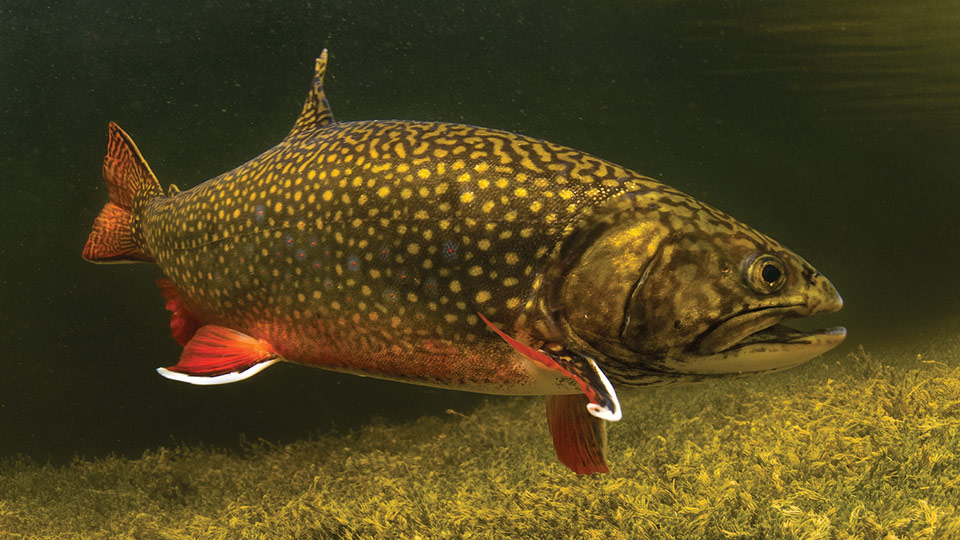
Now, climate-induced vacillations between extreme rain and long, dry months when streams run lower and warmer further threaten the Southern Appalachian brook trout.
Scientists worry that the fish, which is not federally listed as endangered or even threatened, could be pinched out at the southern end of its range as waterways grow warmer. Trout Unlimited has reported that 45 percent of the Southeast’s historical trout stream habitat has already disappeared and another three degree increase will result in another 20 percent loss.
Our project aims to work with the Cherokee Department of Natural Resources, local trout fishing shop owners and guide services to identify streams and mountain bogs in critical need of a rewilding effort aimed at providing bank stabilization and lowering water temperatures.
Goals
Now, climate-induced vacillations between extreme rain and long, dry months when streams run lower and warmer further threaten the Southern Appalachian brook trout.
Scientists worry that the fish, which is not federally listed as endangered or even threatened, could be pinched out at the southern end of its range as waterways grow warmer. Trout Unlimited has reported that 45 percent of the Southeast’s historical trout stream habitat has already disappeared and another three degree increase will result in another 20 percent loss.
Our project aims to work with the Cherokee Department of Natural Resources, local trout fishing shop owners and guide services to identify streams and mountain bogs in critical need of a rewilding effort aimed at providing bank stabilization and lowering water temperatures.
Goals
- Conserve, enhance and restore wild Brook Trout populations that have been impacted by habitat modification, non-native species and other population level threats.
- Encourage partnerships among government agencies, private land owners and other stakeholders to seek solutions to environmental and ecological threats.
- Develop and implement educational programs to raise public awareness about the challenges that wild Brook Trout populations are facing.
- Develop support for program designed to enhance and restore wild Brook Trout populations throughout their historical Smoky Mountains range.